Unlocking the potential of a reed
I agree with the consensus of my teachers that 90% of the reed is decided before any scraping is even done. The cane selection, gouge, shape, and tie completely decide the potential of each reed. Your scraping decides how much of that potential you unlock. Furthermore, I believe the majority of the remaining 10% is how you begin your scrape. Rarely I’ll begin scraping, have the reed start out bad, than actually save it through the finishing work I’ve done. That’s why I believe your initial day or two of scraping is much more important than any other scraping done.
Over the last few years I’ve really tried my hardest to lock in what such a scrape looks like for me, and I feel I’ve finally reached a process I’ve found replicable. From consulting various other players, teachers, students, and my own trial and error here’s what I’ve reached.
After tying (73mm, Mack pfieffer shape, guercio G1 staple) I do a long scrape down the entire reed, starting about 5 mm from the thread. I aim to get past any of the yucky layers of canes, which generally takes about 3 scrapes across. However harder cane could require more. Then I immediately set in the tip at 66mm. I don’t start flat across, instead starting with the V I want the tip inception to end with. It’s not super defined, but my reeds are never as defined as others people’s. It’s crucial to remove enough cane from both the base of the tip and center of the tip here. I will note, because of the way I scrape the bled/transition ends up starting around 66, so often under a light the tip will appear at 67. Vibration is key without getting the overall tip overly thin. From here I will clip the reed open, down to roughly 71.5. This has the reed about 1mm above my finishing length, which I believe is very crucial. Having a tip that is too long from the start makes balancing the different sections of the reed much more difficult. Ultimately no one is ending up with a 6-7 mm long tip, so why work on one that long? At this point the reed usually vibrates assuming I took proper amounts of cane off. What I then do is slightly refine the sides of the tip (no more than a few scrapes on each side) just because pre clip I get nervous scraping there. I then set in my back, with the amount I take out depending on the cane. If the reed wants to be more open or if the cane is harder I will end up taking more out compared to a more collapsed or softer piece. Generally speaking, I will scrape until the reed no longer feels restricted and the vibrations open up (assuming the tip is sufficiently thinned.) At this stage the reed could be used for some scale work if I really wanted, but I typically let it dry out to come back later.
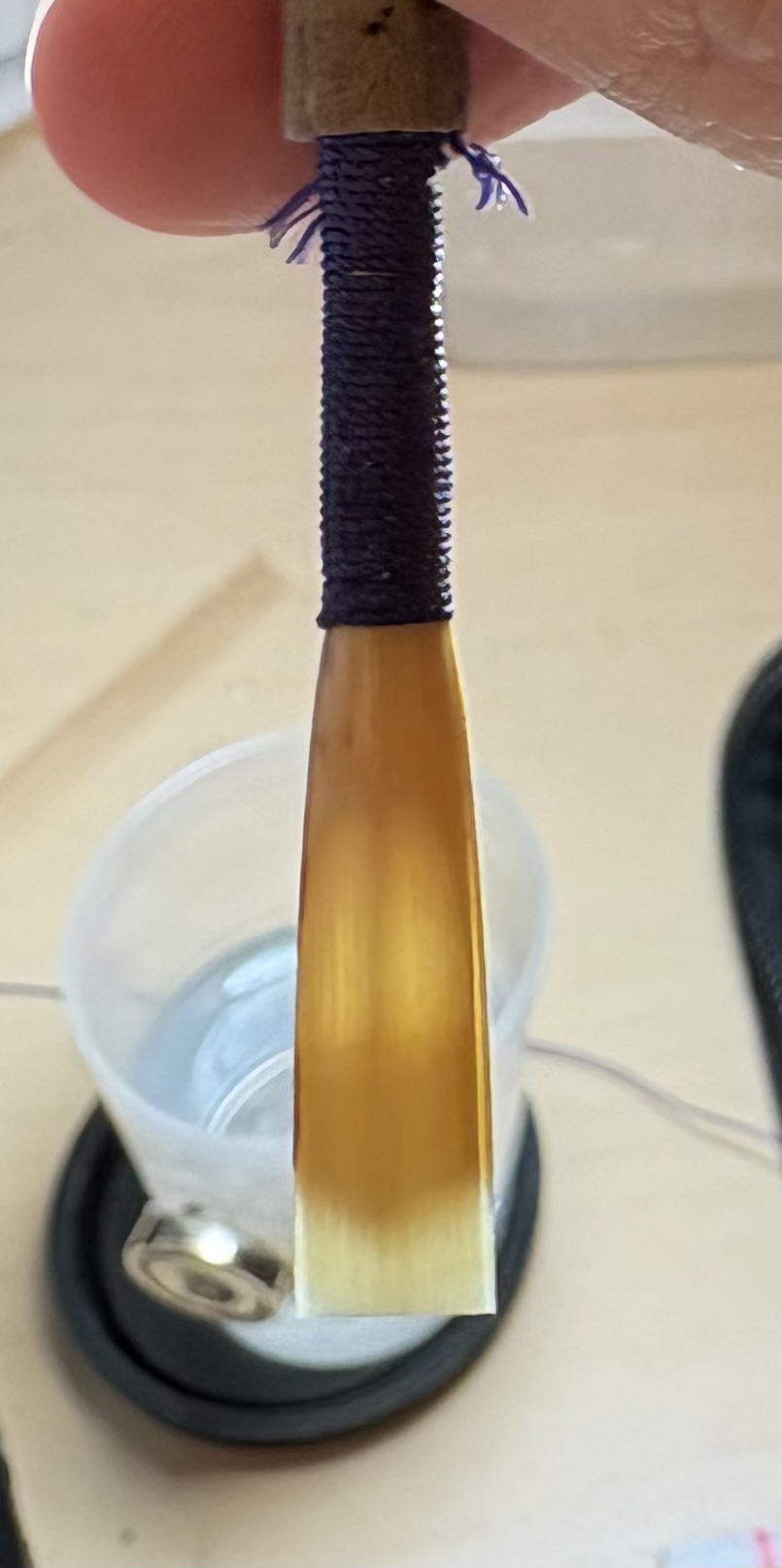
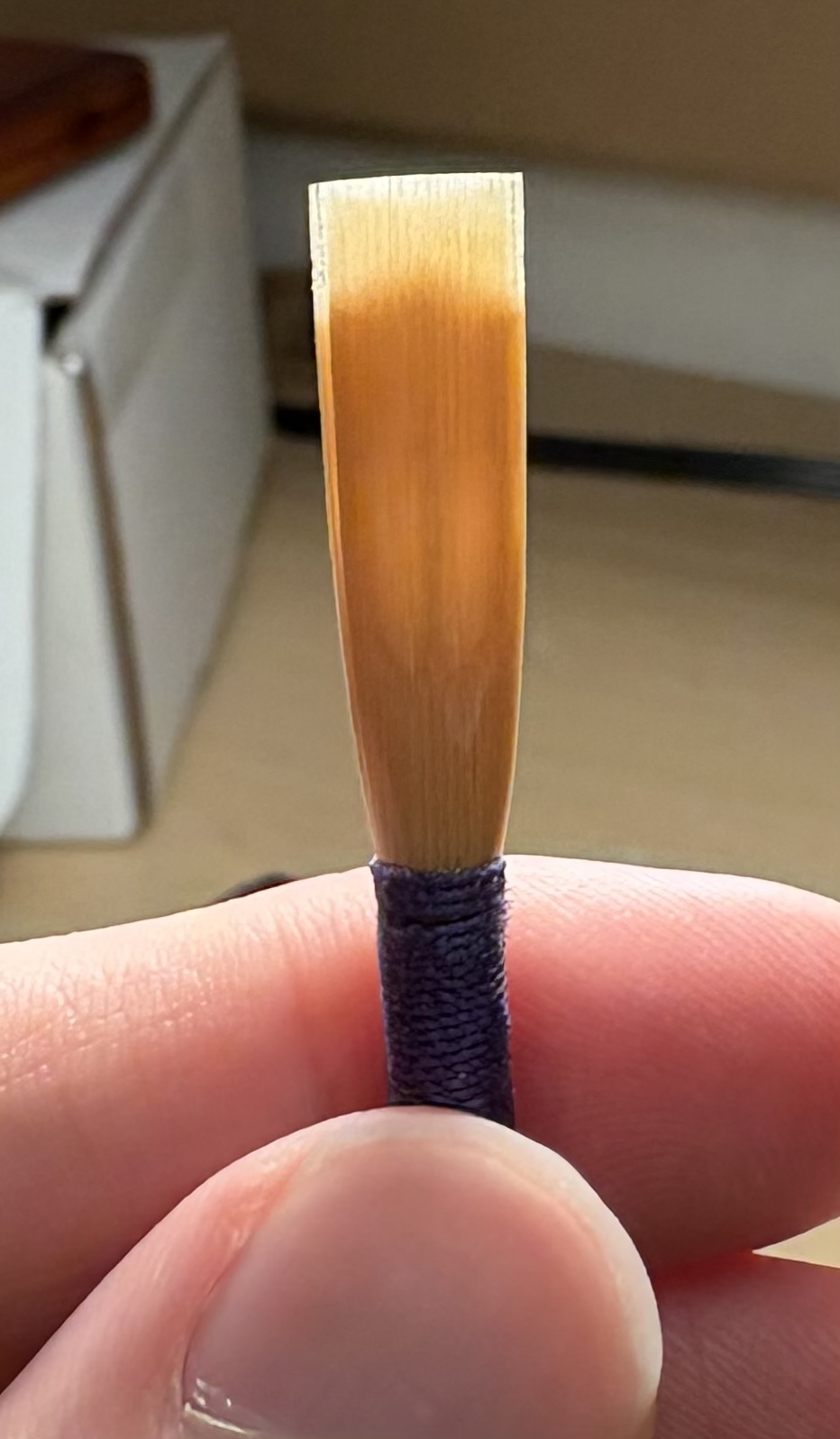
This process leaves me with a reed that will usually just require some general thinning of the entire reed, some slight tip refinement, and a clip. Usually I’ll spend 10-15 minutes on it over the next day or two and then the reed is good to go! The pictures I included on the left are two recent examples of day one reeds.